Different Types of Barcodes Explained: UPC, EAN, Code 128 & More
Barcodes are everywhere—from retail stores and shipping labels to inventory systems and digital payments. While most people recognize a barcode, few understand that there are different types of barcodes, each designed for a specific purpose.
If you’re using a barcode scanner or barcode generator, choosing the correct barcode format is essential. This barcode scanner guide explains the most common barcode types, how they work, and when to use each one.
What Is a Barcode?
A barcode is a visual representation of data that can be read using a barcode scanner. It encodes information such as product numbers, pricing, or tracking details.
Barcodes fall into two main categories:
linear barcodes
2D barcodes
Understanding these categories helps you select the best barcode type for products and systems.
UPC Barcode (Universal Product Code)
The UPC barcode is one of the most widely used barcode formats for retail, especially in the U.S. and Canada.
Key Features of the UPC barcode
12 numeric digits
Designed for consumer goods
Compatible with retail barcode scanners
Common use cases
Grocery products
Retail packaging
Point-of-sale systems
If you sell physical products in stores, the UPC barcode is usually required.
EAN Barcode (European Article Number)
The EAN barcode is an international retail barcode standard.
Key Features of the EAN barcode
EAN-13 and EAN-8 formats
Global compatibility
Works with UPC scanners
Common use cases
International retail
E-commerce products
Global supply chains
The EAN barcode is ideal for selling products worldwide.
Code 128 Barcode
The Code 128 barcode is a high-density barcode used for complex data.
Key Features of the Code 128 barcode
Alphanumeric encoding
Compact size
High data capacity
Common use cases
Shipping labels
Warehouse inventory
Logistics tracking
The Code 128 barcode is widely used in business and logistics environments.
Code 39 Barcode
Code 39 barcodes are simple, readable, and reliable.
Key Features of Code 39
Alphanumeric characters
Easy to scan
Requires more space
Common use cases
Asset tracking
Automotive industry
Government systems
Code 39 is useful when readability is more important than compact size.
QR Codes (2D Barcodes)
QR codes are one of the most popular 2D barcodes today.
Key Features of QR codes
Stores URLs, text, and data
Scannable by smartphones
Error correction built in
Common use cases
Marketing campaigns
Digital menus
Payment systems
QR codes are ideal for fast access and high data storage.
Data Matrix Barcodes
Data Matrix barcodes are compact 2D barcodes used in regulated industries.
Key Features
Extremely small size
High data density
Reliable even when damaged
Common use cases
Healthcare
Electronics
Small product labeling
Data Matrix is often the best barcode type for products with limited space.
1D vs 2D Barcodes
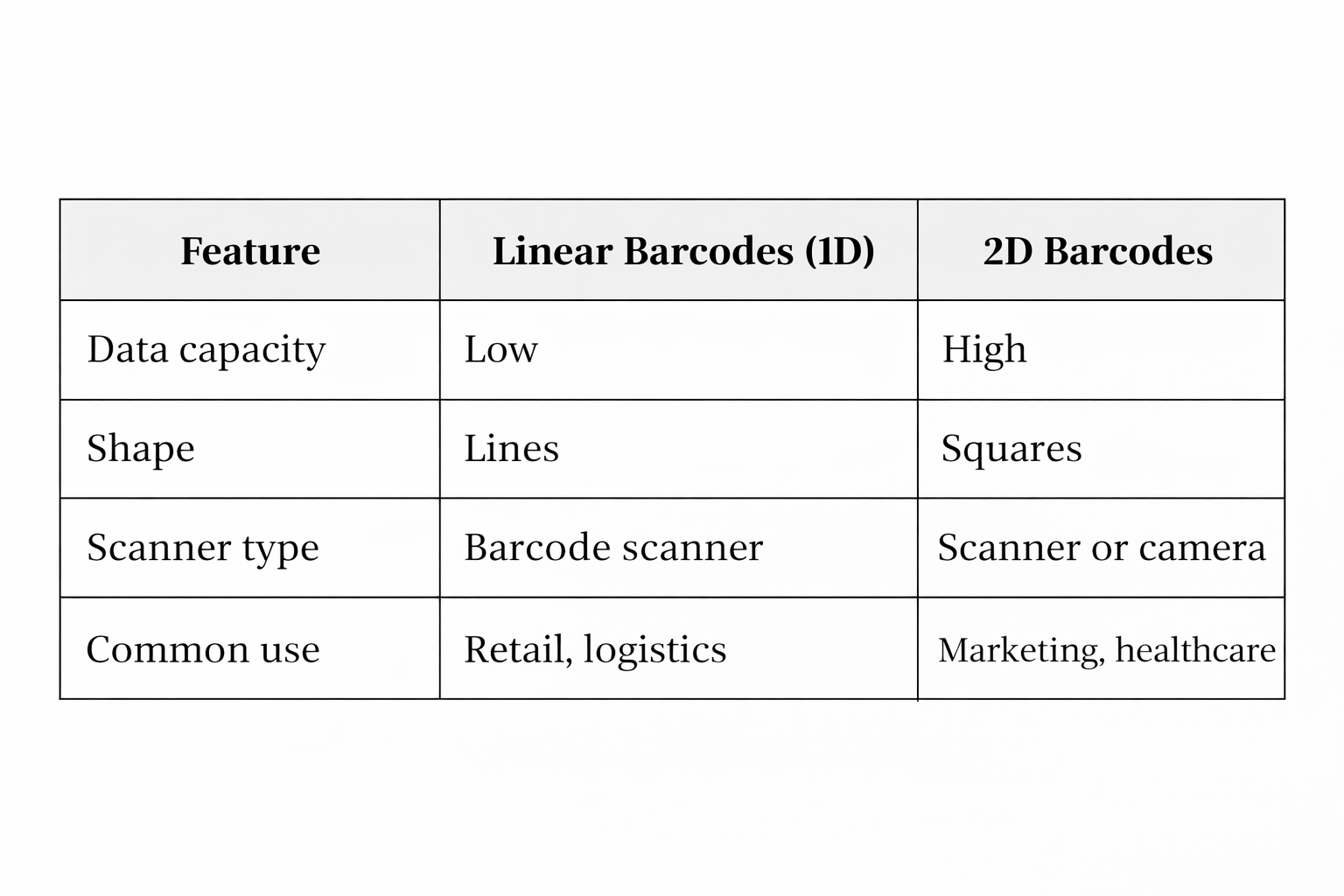
Understanding barcode standards helps ensure compatibility and accuracy.
How to Choose the Right Barcode Type
When choosing between barcode types explained in this guide, consider:
Industry requirements
Data capacity
Scanner compatibility
Label size
Choosing the right barcode prevents scanning errors and compliance issues.
Generate and Scan Barcodes Easily
Modern barcode generator tools and barcode scanner apps allow you to:
Create UPC barcodes, EAN barcodes, Code 128 barcodes, and QR codes
Scan barcodes instantly
Meet global barcode standards
Final Thoughts
Understanding types of barcodes helps businesses operate more efficiently. Whether you need a UPC barcode for retail, a Code 128 barcode for logistics, or QR codes for digital use, selecting the correct barcode format matters.
With the right barcode generator and barcode scanner, barcode management becomes accurate, scalable, and reliable.
Enjoyed this post?
Share it with your network